

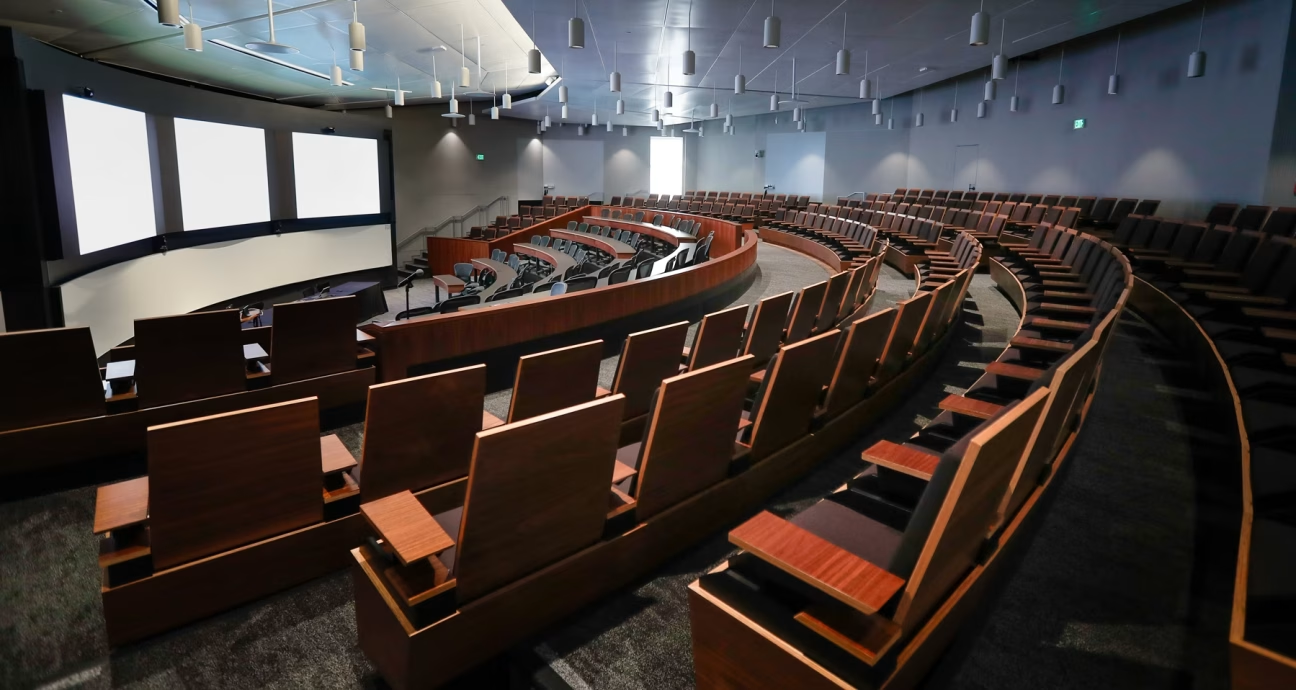
How spatial planning, furniture systems, and design strategies are reshaping university teaching environments
As higher education continues to evolve, university teaching spaces are undergoing a fundamental transformation. No longer defined by fixed classrooms and single-use layouts, today’s teaching buildings are expected to support a wide range of learning scenarios—formal instruction, collaboration, informal exchange, and technology-enabled interaction—often within the same spatial framework.
For universities worldwide, this shift is driven by changing pedagogical models, sustainability commitments, digital integration, and rising expectations for student experience. For furniture and spatial solution providers, it signals a deeper role: moving beyond products to support adaptable, long-term spatial strategies that perform consistently over time.
This article outlines four key directions shaping future-ready university teaching spaces, viewed through the lens of space planning, furniture systems, and practical implementation.
I. From Static Rooms to Adaptive Learning Environments
Traditional teaching buildings were designed around predictability—fixed seating, fixed circulation, and fixed functions. Today, that model no longer reflects how learning happens.
Modern campuses require environments that can:
- Adapt to multiple teaching modes without disruption
- Balance openness with acoustic and visual control
- Support sustainability goals without sacrificing durability
- Integrate technology without increasing operational complexity
Furniture plays a central role in this transformation. As the most direct interface between space and user, it determines how easily a room adapts, how comfortably it performs, and how long it remains relevant.
II. Four Directions Defining Future University Teaching Spaces
Rather than isolated trends, the following four directions form an interconnected framework. Together, they describe how teaching buildings are being planned, furnished, and operated to meet future demands.
1. Experience-Led, Human-Centered Spaces

Teaching spaces are increasingly designed around the daily experience of students and faculty. Comfort, inclusivity, ergonomic support, and ease of use are no longer secondary considerations—they directly influence engagement, well-being, and learning outcomes.
This direction focuses on how furniture responds to real human needs across different cultures, climates, and teaching styles, translating people-centered design principles into practical spatial solutions.
2. Multi-Scenario Hybrid Layouts

Single-function rooms are giving way to flexible environments that support lectures, group work, informal collaboration, and hybrid learning—often within the same footprint.
Here, furniture systems enable rapid reconfiguration, acoustic control, and clear circulation, allowing spaces to shift function without excessive setup time or technical friction.
3. Green Ecological Integration Adapted to Low Carbon

Sustainability in teaching buildings is moving beyond visual symbolism toward measurable performance. Low-carbon materials, biophilic integration, and energy-aware furniture systems are becoming integral to spatial planning.
This direction examines how furniture choices connect ecological goals with durability, flexibility, and long-term campus operations.
4. Smarter Spaces That Adapt in Real Time
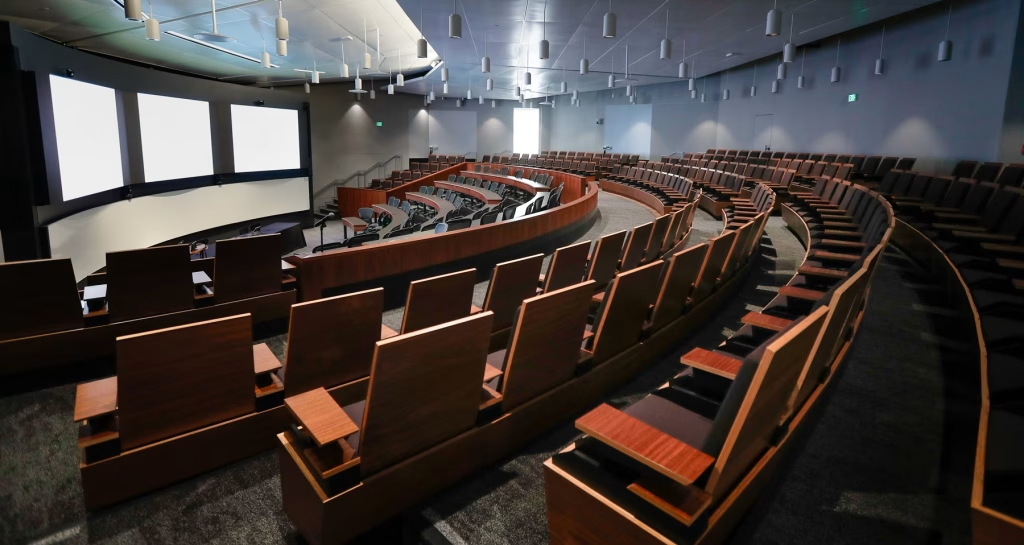
Smart technology is transforming teaching spaces into responsive environments—where lighting, energy use, and spatial configurations adjust based on real-time needs.
Furniture integrated with power access, sensors, and intelligent systems acts as the physical anchor for this shift, ensuring technology enhances usability rather than complicating it.
III. A Furniture-Led Perspective on Long-Term Value
Across all four directions, one principle remains consistent: successful teaching spaces are not defined by novelty, but by long-term adaptability.
For universities, this means investing in environments that evolve without constant replacement. For furniture providers, it means designing systems that balance flexibility, durability, and clarity—supporting architecture, technology, and people as a cohesive whole.
IV. About Yuulyn
Yuulyn works with universities and project partners to support future-ready teaching spaces through integrated furniture systems and spatial strategies. By aligning human experience, functional flexibility, sustainability, and intelligent integration, we help transform emerging trends into practical environments that perform over time.
Yuulyn Furniture — For all. For good. For tomorrow.
Discover more from Yuulyn Furniture
Subscribe to get the latest posts sent to your email.
